
FAQs
- The current R30-R60 density applicable to the Residential B precinct is being simplified to R60;
- The designated density code of the Residential Precinct A, Railway Frame and Railway Core is proposed to be increased. The amendment has proposed a range of densities from R100-R160, and R-AC3 to R-AC1.
- The ‘minimum 2 storey’ building height requirement is proposed to be removed for properties within the current Residential Precinct B (R30-R60) area. This is In relation to the R-Code designation being simplified from ‘R30-R60’ to ‘R60’. Landowners in this area will be able to develop up to R60, and at any building height. It is expected this will give more autonomy in redeveloping these specific lots while also removing the financial burden of the additional storey. It is envisioned this change will lead to a general lower cost of development and in return improve the housing output of low scale housing product.
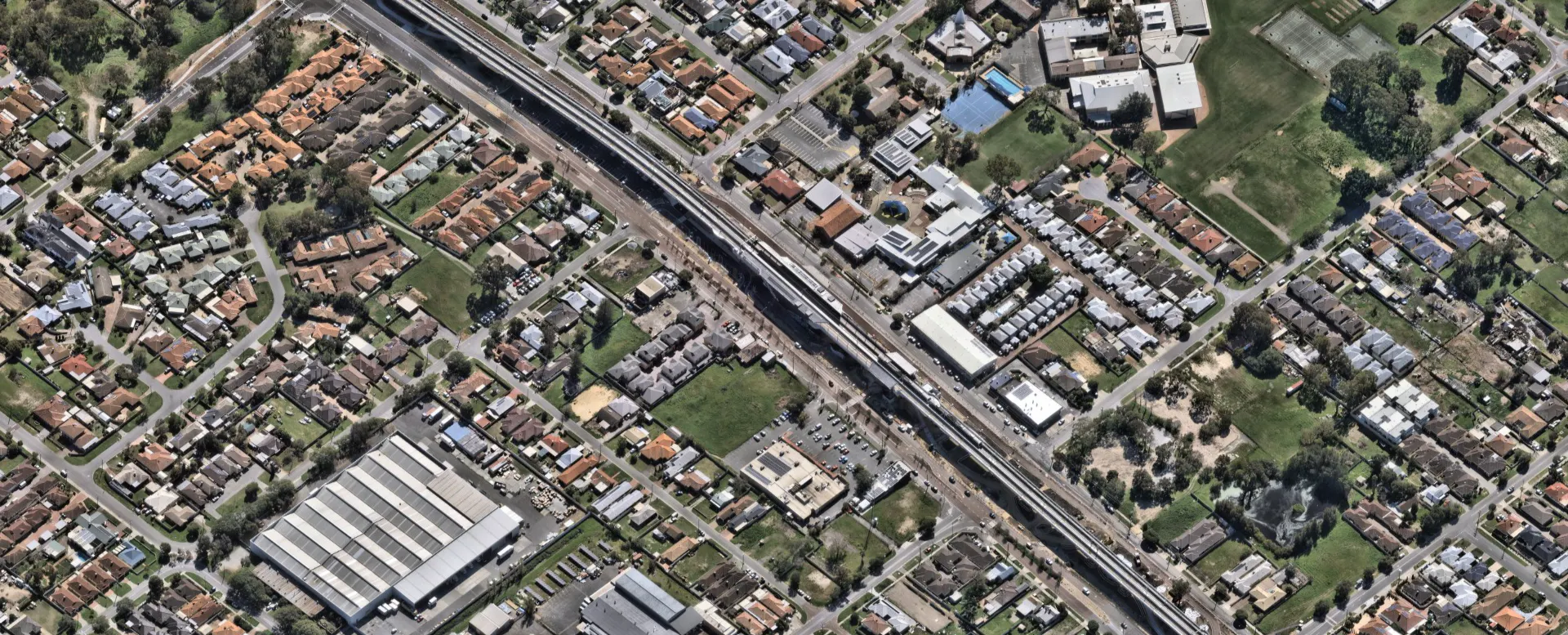
- Primary development controls have been simplified for properties currently within the ‘Railway Frame’ and ‘Railway Core’ precinct, which will instead be designated an R-Code between R100 to R-AC1, depending on proximity to the train station and lot size. Some substantially sized lots have been proposed to have a higher density code compared to adjoining neighbours due to the opportunity presented by larger landholdings with single owners, or are located adjacent to the Armadale train line.
- The Amendment proposes the removal of plot ratio requirements for multiple dwellings to incentivise design flexibility and improve dwelling yield for future developments, leading to increased housing supply. There is also an opportunity to reduce the number of private vehicles bays for high density residential development, explained further below under ‘car parking’, leading to more development ‘space’ for dwellings instead of car parking.
- A building height range is proposed for all lots who have a proposed R-Code designation from R100 to R-AC1. This will give clearer guidance as to what the City expects to be built at a sufficient scale that acknowledges the proximity to the train station and reflects the opportunity of developing higher density housing near the newly built Queens Park train station.
- The ground floor land uses for lots within the R-AC1 ‘Railway Core’ precinct has been reviewed, with a number of land uses removed which were viewed as not conducive to a mixed-use urban transit hub (e.g. bulky goods showroom, car park and warehouse). Commercial land uses which activate frontages and bring vibrancy to this sub precinct have been prioritized while residential land uses (I.E. Multiple Dwellings – Apartments) have been shifted to ‘above the ground floor’.
- The amendment introduces a mixed-use precinct with a density of R-AC3. Unlike the R-AC1 ‘Railway Core’ precinct, this new sub precinct allows the consideration of dwellings on the ground floor in addition to specified commercial uses, with an expected outcome of increased housing yield.
- Allow for the consideration of grouped dwellings in higher density areas, on the basis the proposal satisfies the minimum height requirements. While development of grouped dwellings in the current ‘Railway Frame’ has not been supported in the past, if the amendment is approved in its current form, the City could entertain such proposals as long as they satisfy other relevant development controls such as building height.
- Properties with proposed designated density of R60: 1 or 2 storeys.
- This change is to align this precinct with the building heights required under Volume 1 of the R-Codes. This change removes the minimum 2 storey height requirement for properties with that particular R60 Density Code.
- Properties with proposed designated density of R100: 2-4 storeys.
- This height range is expected to produce two storey villas (grouped dwellings) or low-rise apartments (multiple dwellings) of a sufficient scale that signals the transition from low scale outer suburbia towards the high density core of the precinct.
- Properties with proposed designated density of R160: 2-5 storeys.
- This height range signals a shift to mid-rise apartments. It is expected that these lots, which are adjacent to the Activity Centre (AC) zoned lots, or are targeted lots of substantial size, will develop into mid-rise medium density apartments.
- Properties with proposed designated density of R-AC3 (Mixed-Use Precinct): 4-6 storeys. This height range is proposed to align this new precinct with the typical building heights outlined for R-AC3 density code under Volume 2 of the R-Codes while allowing some flexibility via unrestricted plot ratio in combination with the proposed height range.
- Properties with proposed designated zone of R-AC1 (Railway Core Precinct): 6-9 storeys. This change is to align this precinct with the maximum building heights prescribed under Volume 2 of the R-Codes, achieving the highest density and building scale contemplated by Volume 2 of the R-Codes directly adjacent to the Queens Park train station.
- Letters sent to all landowners and occupiers within the structure plan’s boundaries and 200m outside of the structure plan area;
- Information placed on the City's engagement website (YourSay Canning); and
- Various standard and social media channels available to the City.
- The best place to make a submission is via this Your Say Canning webpage (www.yoursaycanning.com.au/qplsp).
- Alternatively, written comments can be mailed to City of Canning, Locked Bag 80, WELSHPOOL WA 6986.
What is a Local Structure Plan
A Local Structure Plan (LSP) is a statutory urban planning instrument made under the Planning and Development (Local Planning Schemes) Regulations 2015.
Its purpose is to set out land use, density and development requirements over a specific area, addressing issues such as planning, fragmented land ownership, infrastructure provision, and site constraints.
The structure plan must be consistent with the local planning scheme (LPS 42) and conform to the objectives of state’ strategic planning framework for the metropolitan region of Perth.
They are valid for 10 years and this particular Structure Plan was originally approved in 2016, as such it is approaching its operational end date. The City will seek an extension to the approval date of the structure plan via the WAPC as part of this amendment.
Will this amendment require the acquisition of my house?
No, this amendment does not propose the acquisition of any private property. The City has previously acquired some lots for the provision of open space (e.g. Queens Park Reserve). However, all new public open space development is likely to occur on government owned land e.g. Long Park.
Does the proposed amendment (Amendment No.3) change the zoning or development potential of my property?
Yes, Amendment No.3 (the Amendment) proposes changes to the current designated zoning for all properties within the structure plan area. No current densities are being lowered or reduced. The main changes to zoning of properties are summarised below:
The main changes to development requirements of properties are summarised below:
The existing land use table is proposed to be modified, and a summary of these modifications are included below:
What are the building heights proposed by the amendment?
The amendment does make changes to the building height requirements currently enforced by the existing structure plan. The changes to building height requirements for each newly designated density are as follows:
Will there be more houses?
The fundamental objective of this amendment is to increase housing numbers and differing housing types.
The existing Structure Plan forecasted 3400 additional dwellings to be built by 2031. Accounting for existing housing stock, this required approximately 120 dwellings to be built every year to reach the dwelling target (3400) within the set timeframe (2031). after investigating the actual dwelling construction rate, the City determined that 18 dwellings were being built per year on average which is considered insufficient.
The proposed Amendment would allow for more dwellings than currently expected. The City engaged an external consultant to forecast hypothetical dwelling numbers based on the proposed R-Code changes. The Feasibility Study (see Documents) demonstrated a net additional dwelling range of between 6,800-11,420 new dwellings across the structure plan area.
While low scale typical detached or semi-detached housing should occur on the edge of the structure plan area in the R60 areas, the structure plan envisions denser and more efficient housing typologies such as terrace housing, garden apartments and mid to high rise apartments as one approaches the train station from the R100 to R-AC1 areas.
This amendment aims to cater to the growing population, and in particular the major housing groups seeing the most forecasted growth such as ‘lone persons’ and ‘family’ households.
Will there be more businesses?
The structure plan currently envisions a vibrant transit core, leveraging the train station as a point of activity and transition for residents and visitors. This has not changed. However, the addition of the mixed use precinct could see more business offerings that cater to the everyday needs of residents, depending on what is finally proposed by landowners/ developers. The structure plan has been constructed in a way to allow a range of commercial land uses on the ground floor for a number of lots that are either substantial in size or close to the train station.
Will there be more parks or public spaces ?
The structure plan does not propose the acquisition of private property for more public open space. However, since the adoption of the current structure plan in 2016, the State governments’ investment via the METRONET program has delivered a substantial amount of public open space via Long Park. The City is also engaging with other state government agencies, such as WaterCorp, to review existing government-owned reserves which could be transitioned into more accessible public open space. The current total area of public open space within the structure plan area is considered sufficient.
How will you manage car parking/ traffic ?
In time, as the local population grows, this effect generally leads to more car parking demand and traffic of various forms. Car parking on private lots is managed via the R-Codes or the Local Planning Scheme, so prescribed rates of car parking exist in the planning framework that sufficiently address all future development. The City can only control public car parking or on-street parking. If the public parking demand is observed to be a major issue requiring intervention, then the City could implement timing controls in certain areas or consider a Car Parking Management Plan for the entire precinct, though that is outside the scope of this Amendment.
The Amendment does propose an option (Clause 4.3 F-G) to reduce the number of private vehicle bays for apartments via a shared vehicle scheme. This effectively would reduce the number of required bays, up to 25 bays for developments with 51+ apartments while providing a vehicle hire service as part of the strata so residents can book a vehicle should they need one. This is optional and not every development is required to enact such a scheme. However one outcome would be less private cars on the road, depending on uptake of this option from future developments.
This draft provision would reduce car dependency for some residents, improve uptake of other transport options and give more space within a development for more housing instead of car parking.
Additionally, due to the strong public transport links through the structure plan area, residents and visitors will hopefully be inclined to shift their mode of transport to active modes (bicycle or walking) or use public transport instead of relying on private motor vehicles (Cars, Motorbikes, Scooters etc.). This is achieved through locating most of the future local population close to amenities and businesses that satisfy their day-to-day needs which is a key objective of the structure plan and this amendment.
How is the structure plan being advertised for public comment?
The Structure Plan is being advertised in the following ways:
In addition, the City is holding two community drop-in sessions from 4pm-7pm on Wednesday 29 April & Wednesday 6 May 2026 in the Harry Turner Pavilion on Treasure Road in Queens Park.
These sessions will give interested residents an opportunity understand the proposed changes, to see how their property is affected and speak to one of the City’s planners on the proposed changes. Please note that discussions are informal and any formal comment that you wish to be addressed must be in writing.
The public comment period opens on the Tuesday 14th of April 2026 and concludes at 5pm Tuesday 26 May 2026.
Do I have to make a submission if I received a letter?
No, you are not required to make a submission. However, anyone can make a submission should they wish to, even if they are outside of the structure plan area.
How do I make a submission?
Submissions must be made in writing, but a number of methods can be accepted.
Where can I find additional information about the structure plan?
The best place to view all information relating to this amendment can be viewed on the associated YourSay Canning engagement webpage under the documents widget on the right side of the project page. Additionally, the City has prepared a separate webpage, https://www.canning.wa.gov.au/qplsp, where you can search for your property address and compare the two structure plans to see what changes directly affect you.
Documentation relating to the amendment can also be viewed at the City’s administration building from the 14th of April to the 26th of May.
Who makes the final decision?
While Council could endorse a final version of this amendment at a future council meeting, the Structure Plan is then referred to the State Government’s Western Australian Planning Commission (WAPC) as they are the final decision making body for the Structure Plan. As such, the structure plan could be subject to changes if requested by the state after endorsement by Council.
When will Council consider the structure plan for endorsement?
The advertising period for this amendment is open until the 26th of May, then the City will review all submissions. This review period is can typically take up to 60 days as part 4 Clause 20(1)(a) of The Regulations.
However, depending on the number and size of submissions, the City may request an extension of this review period to the WAPC. It is expected the City will present a final version of the Amendment with a schedule of submissions and schedule of modifications (if any) to a Council Meeting in Q3 of this year (July-September) 2026.